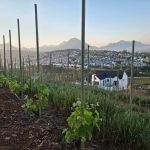
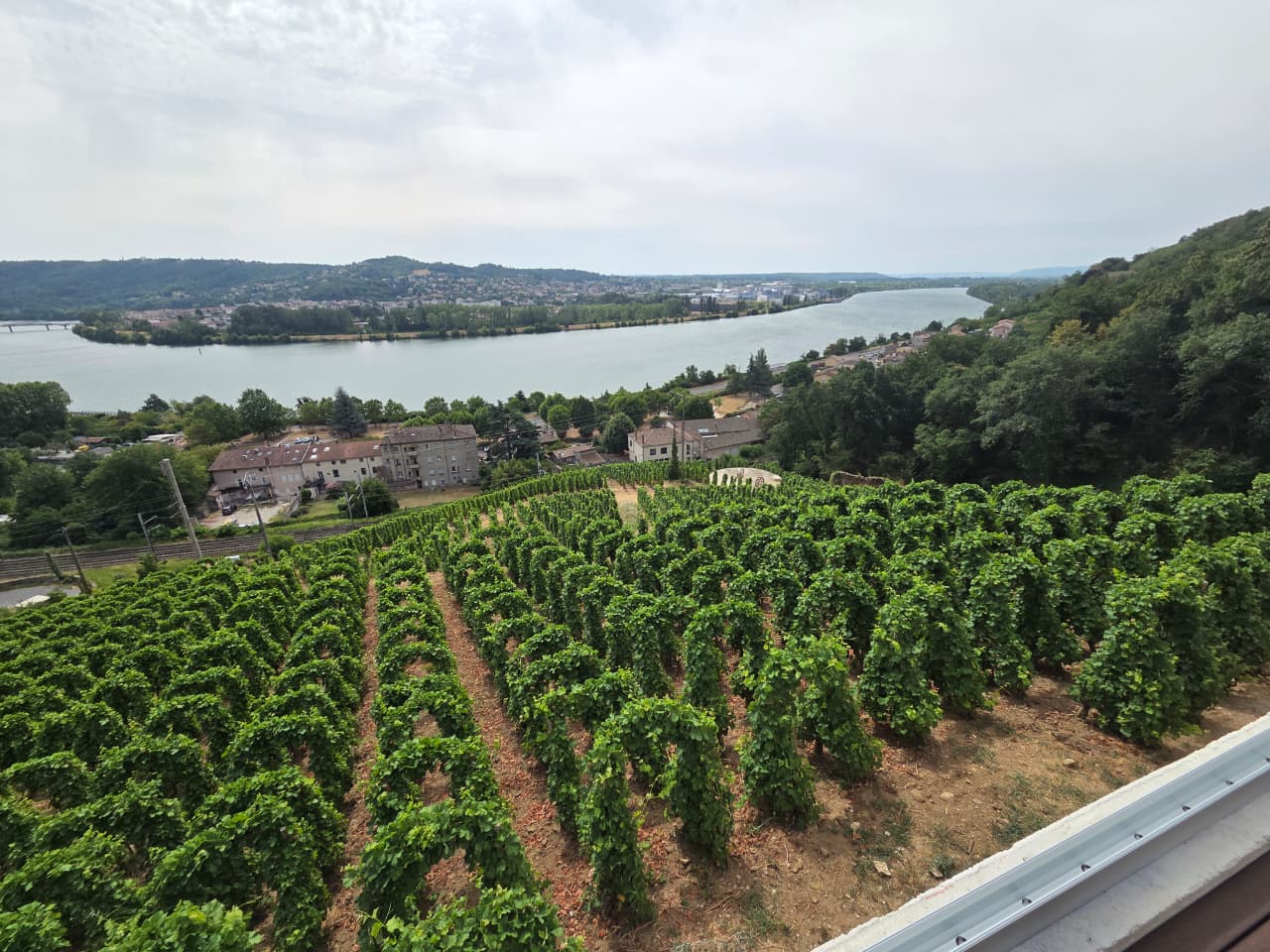
The next morning we headed out to meet up with Graeme at Domaine Bott in Côte-Rôtie. Graeme took us out into the vineyards where we spent some time chatting viticulture before heading up to the Belvédère at Tupin-et-Semons.
The viewing platform gives you a fantastic vantage point over the vineyards of Côte-Rôtie. From up there you can really appreciate just how steep and rugged this landscape is and how the vineyards have been fitted into the hillsides.
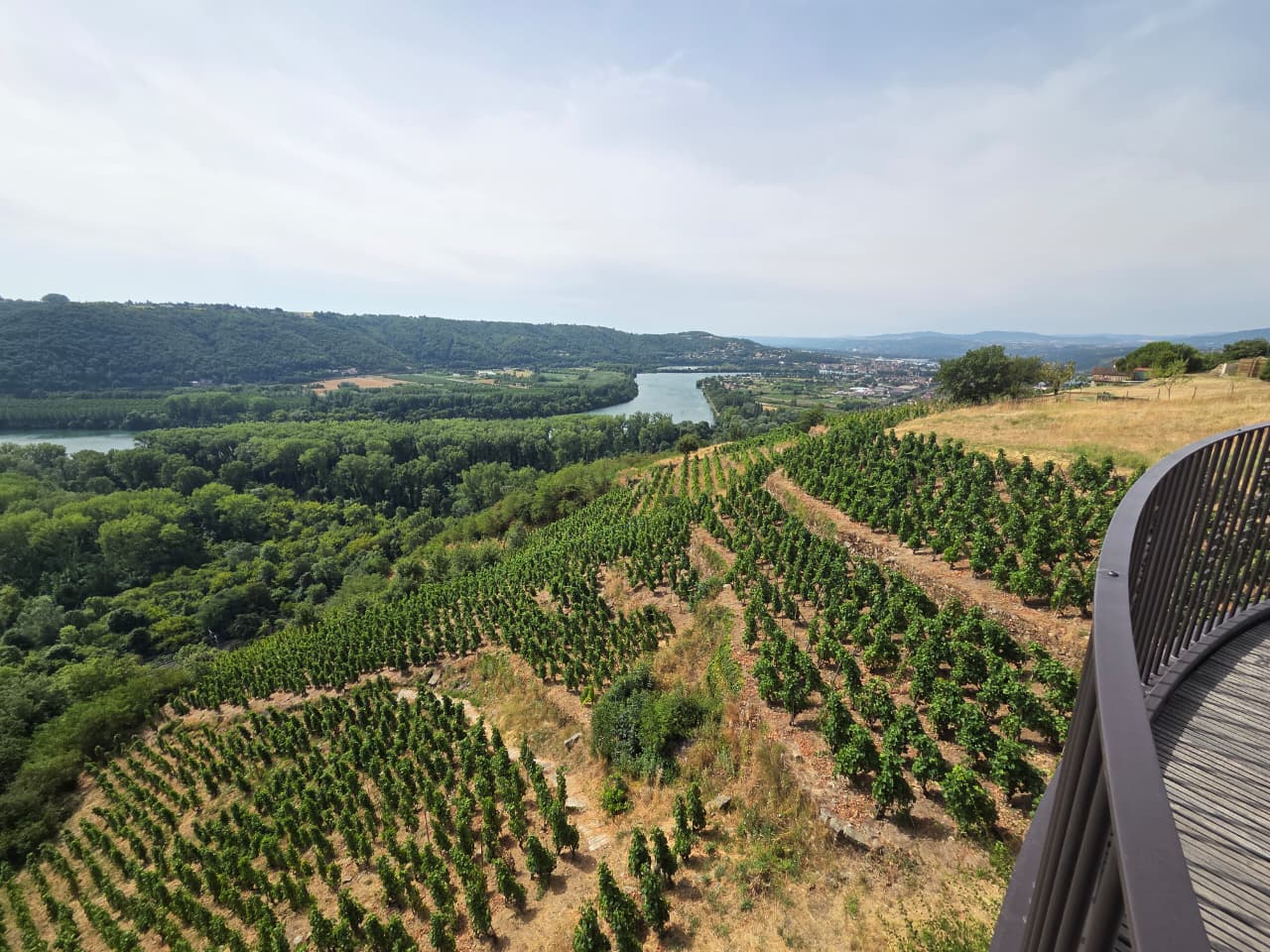
From there we headed back to the cellar to taste some of Graeme’s wines. Another great morning out with Graeme, as always.
We then headed off for lunch with my good friend Rianne Ogink. Rianne is Dutch and has been deeply involved in the wine industry for many years. She is now running her own business, working with wine imports and exports as well as doing some wine tourism in the Northern Rhône. Rianne and I have been good friends for years, so it was great to spend some time with her again.
After lunch we headed off to meet Loïc at Domaine Jamet. I had never visited Jamet before, so I was really looking forward to seeing the vineyards.
Loïc took us into the vineyards where we had some really good discussions about the drought they are facing and some of the ways they are trying to cope with it. We also spent quite a bit of time talking about interplanted vines and discussing how best to manage and care for them. Although they are allowed to water interplanted vines, the steep slopes and lack of infrastructure makes it very difficult, time consuming and expensive.
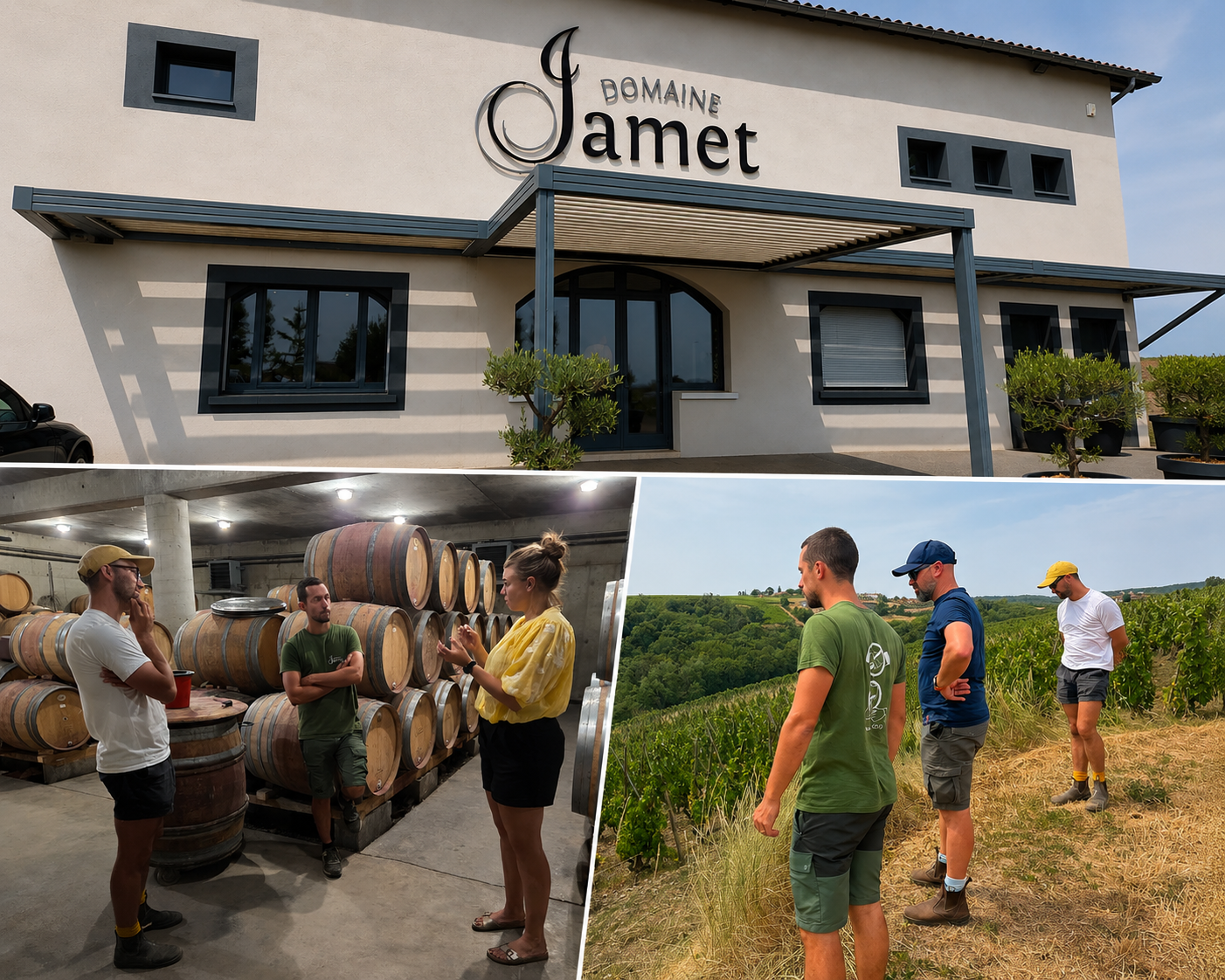
From the vineyards we did a quick cellar tour before tasting some wines.
After Jamet, Rianne took us to the La Landonne vineyard.
This place is insanely steep.
Standing in the vineyard really makes you appreciate what viticulture in Côte-Rôtie can involve. The slopes are so steep that simply walking through the vineyard is hard work, never mind doing all the vineyard operations by hand. Looking across the hillsides, you can see why every square metre has to be carefully considered and why vineyard work here is such a labour-intensive job.
It was another good reminder of just how different the viticulture in the Northern Rhône is from what we had seen in Burgundy and Champagne.
From there we headed back to Rianne’s, where we had a braai and dinner. Karen and Thomas came up from Gervans to join us, making it a proper Northern Rhône evening with good food, good wine and good friends.
The next day we spent with Thomas in the vineyards around Crozes-Hermitage and Saint-Joseph. By now, you could see various parcels throughout the region starting to struggle after their fifth heatwave. Even so, it was remarkable to see how good most of the vineyards still looked.
Weed management seemed to be playing a very important role.
On the Hill of Hermitage, we saw that the parcels struggling the most were the ones being farmed “bio-dynamically”.
Now, I have no problem with organic farming or biodynamics. What I do have a problem with is when farming philosophies become more important than what is actually happening in the vineyard.
I have never read in any organic or biodynamic literature that says you should not be vigilant about controlling weeds — particularly when dry farming in an increasingly erratic climate. Weeds are competing directly with the vines for water, and when water is already the limiting factor, that competition becomes increasingly difficult to ignore.
In a “normal” year, perhaps you can get away with it. But the climate in Europe is clearly becoming anything but normal.
And this is where I struggle with some of the more ideological approaches to viticulture. Farming systems should ultimately be judged by how well they produce healthy, resilient vines and good fruit under the conditions that actually exist — not by how good they look on paper or on Instagram.
If the vineyard is under severe drought stress, perhaps it is time to spend a little less time on Instagram telling people how great you are, and a little more time in the vineyard showing them how great you are.
For me, that is what good viticulture is ultimately about: responding to the conditions in front of you, rather than blindly following a set of rules because that is what you have always done.