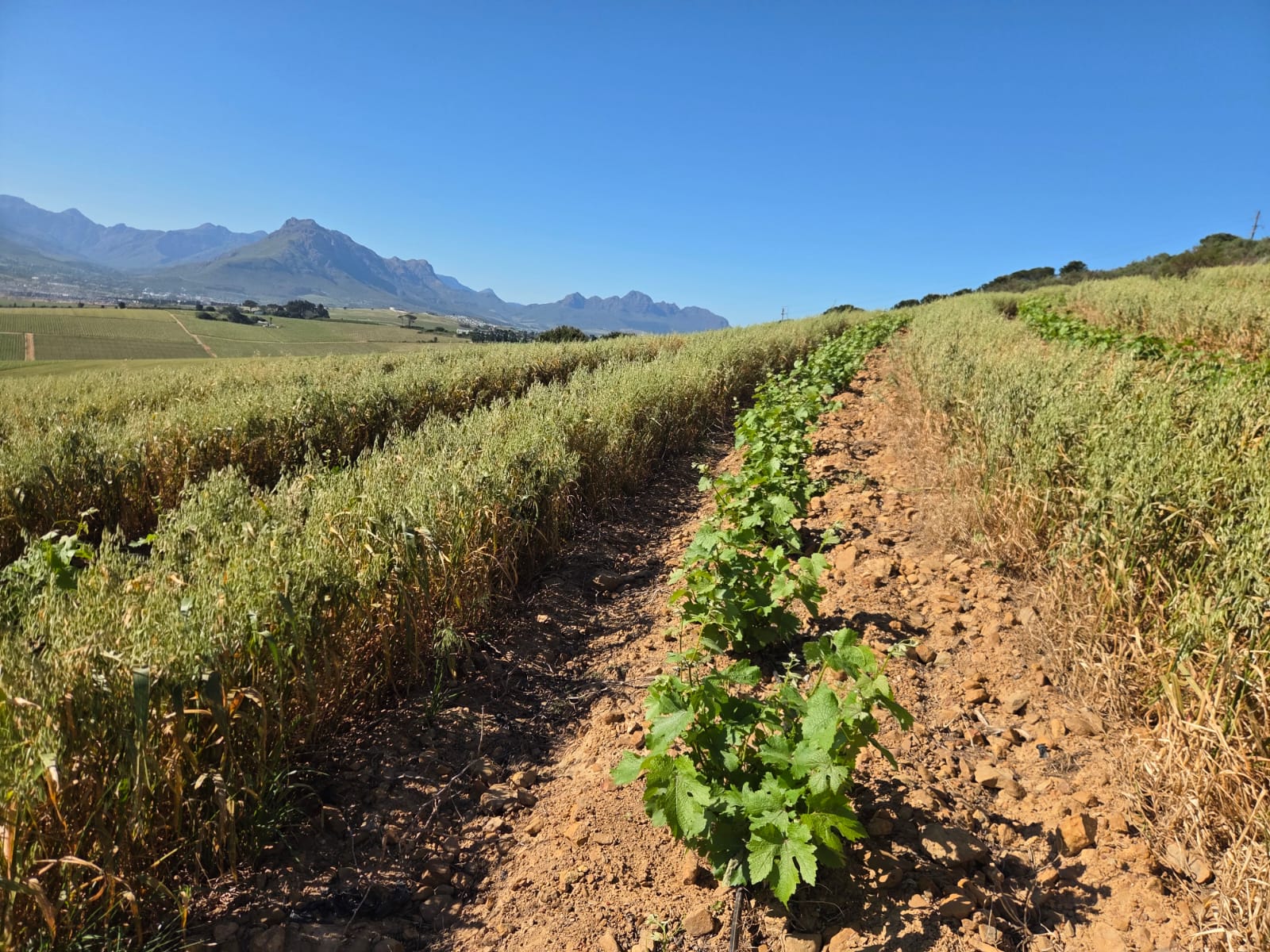
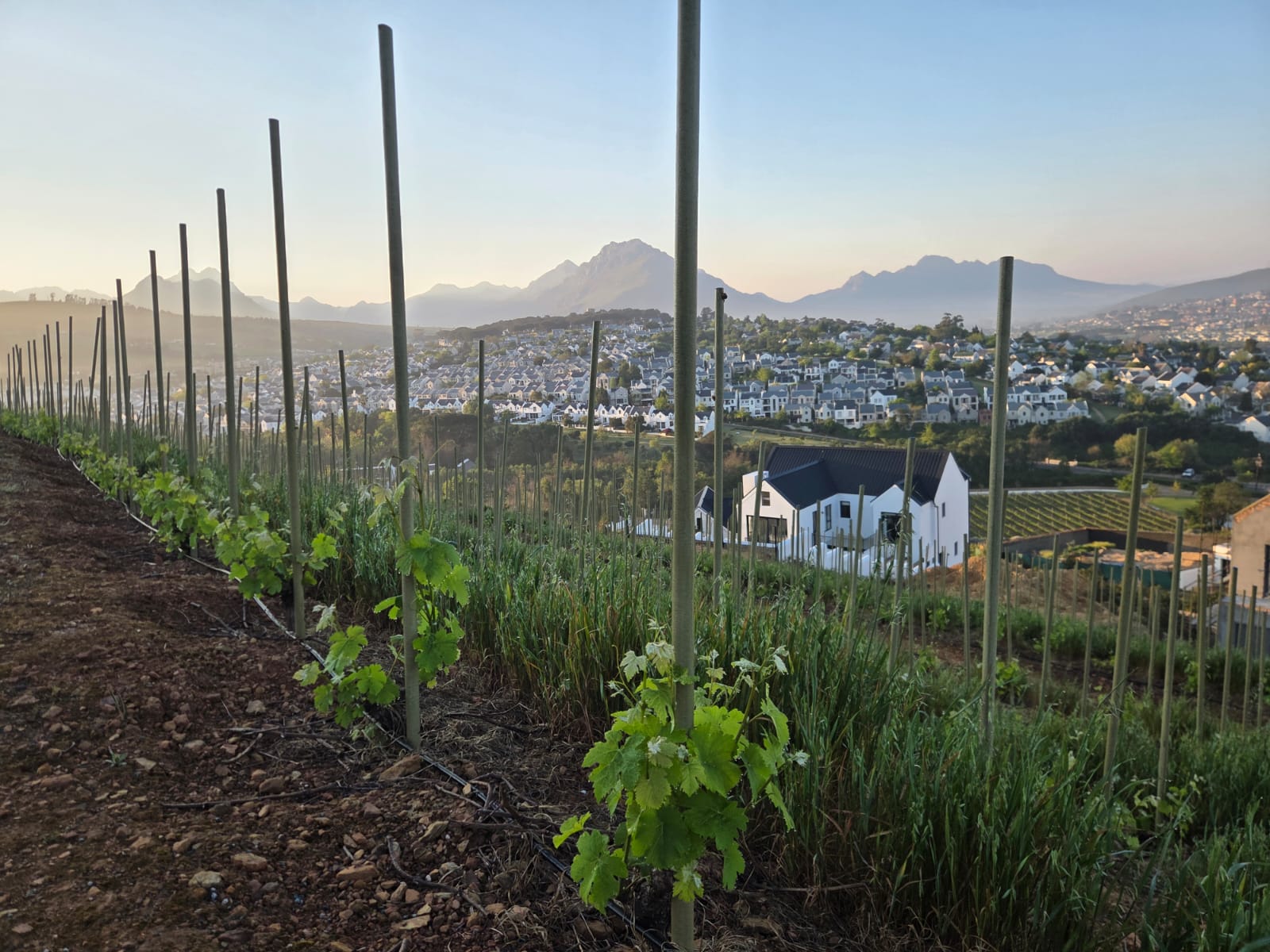
Sitting in my office on the 6th of October 2026. It’s chilly outside and we have had quite a bit of rain since last night and this morning — between 12 and 38 mm depending on your location.
It is very welcome rain after the terrible winter and spring we have had. It does make coping with downy mildew more challenging, but we can spray for that. We cannot create water.
It feels like winter never really came this year. April and May started with a bang. So many farmers suffered huge losses with floods wreacking havoc across the Western Cape. But these rains where short lived. Come “winter” we had no snow on the mountains, hardly any rain, especially during July and August, and relatively warm days. Spring arrived very early as a result, and all the trees and plants seemed to wake up at once. There was just no stopping them.
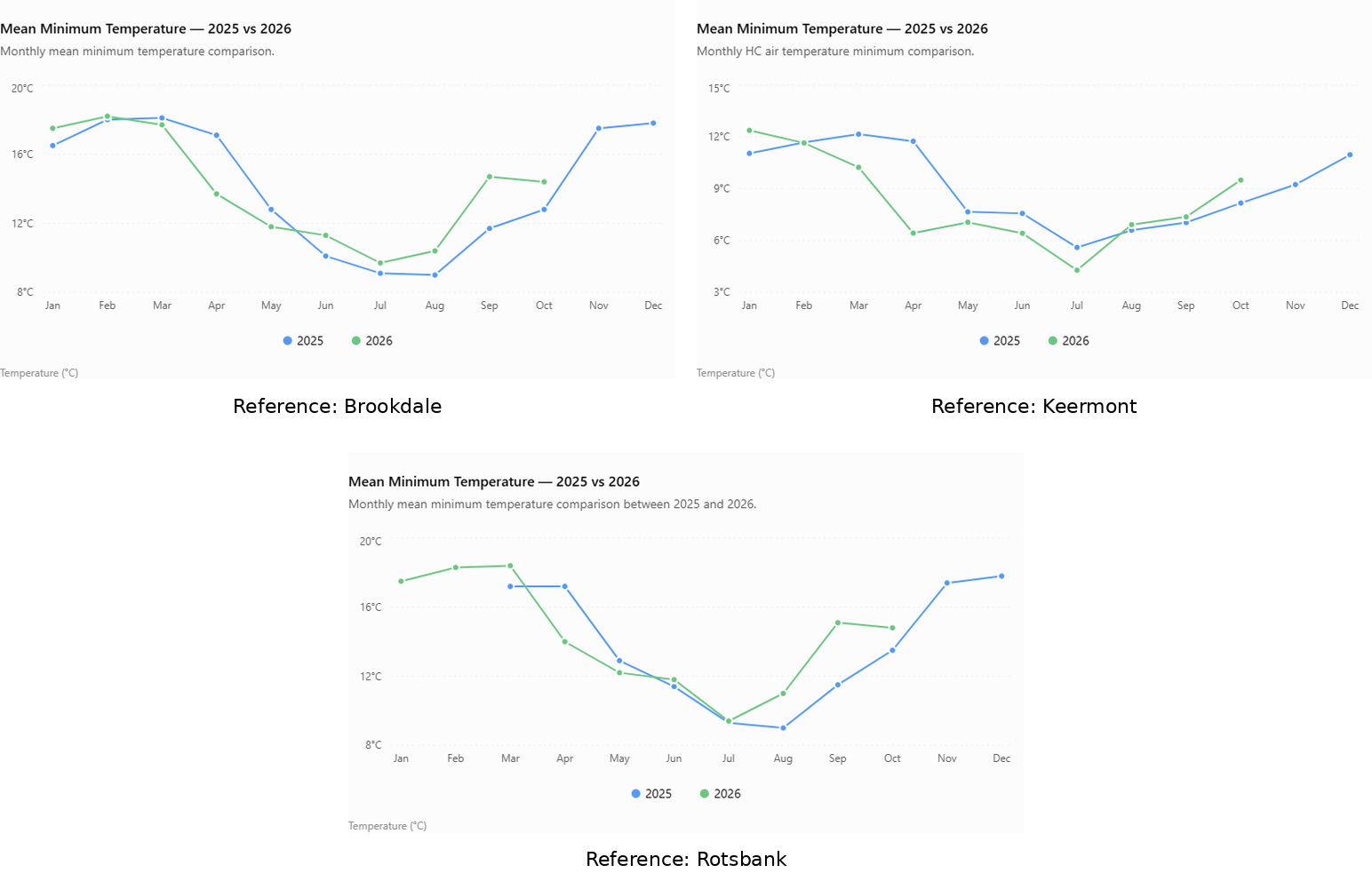
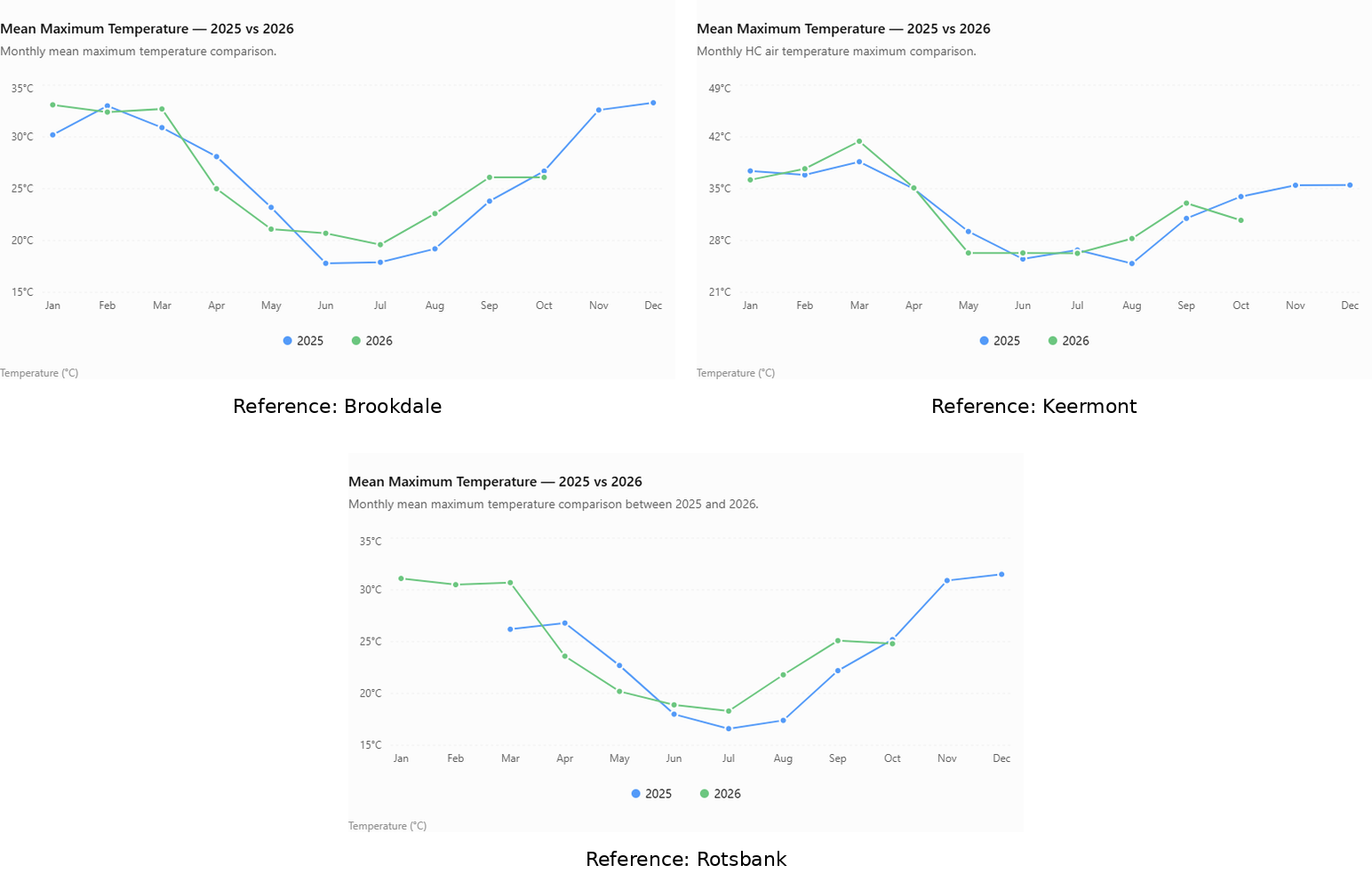
I have looked at some weather data from the 2025 and 2026 seasons. Unfortunately I don’t have long-term data for these sites yet, but we are working on expanding our weather station network (Any sponsors are welcome!). The three properties I looked at are in the Swartland (Rotsvas), Paarl (Brookdale) and Stellenbosch (Keermont, in the Stellenbosch Mountains).
The graphs below tell the story without me having to write a very long article.
Some rain in September really saved our skins, because if we had another month or two like July and August, we would have been in serious trouble.

Then looking at temperature you can see that the lack of rain — and therefore the lack of cold fronts — has certainly contributed to overall temperatures being higher, both minimum and maximum.
This also drives up soil temperatures which sends a signal to the vines to wake up. In some cases we had Chardonnay budding four weeks early, and by the end of September we were already seeing Pinot Noir flowering in Stellenbosch — also around four weeks early.
As I am typing this and getting all the graphs ready I realise this is such a nerd post. My colleague Dr Dylan Grigg in Australia will love this!
So, back to business.
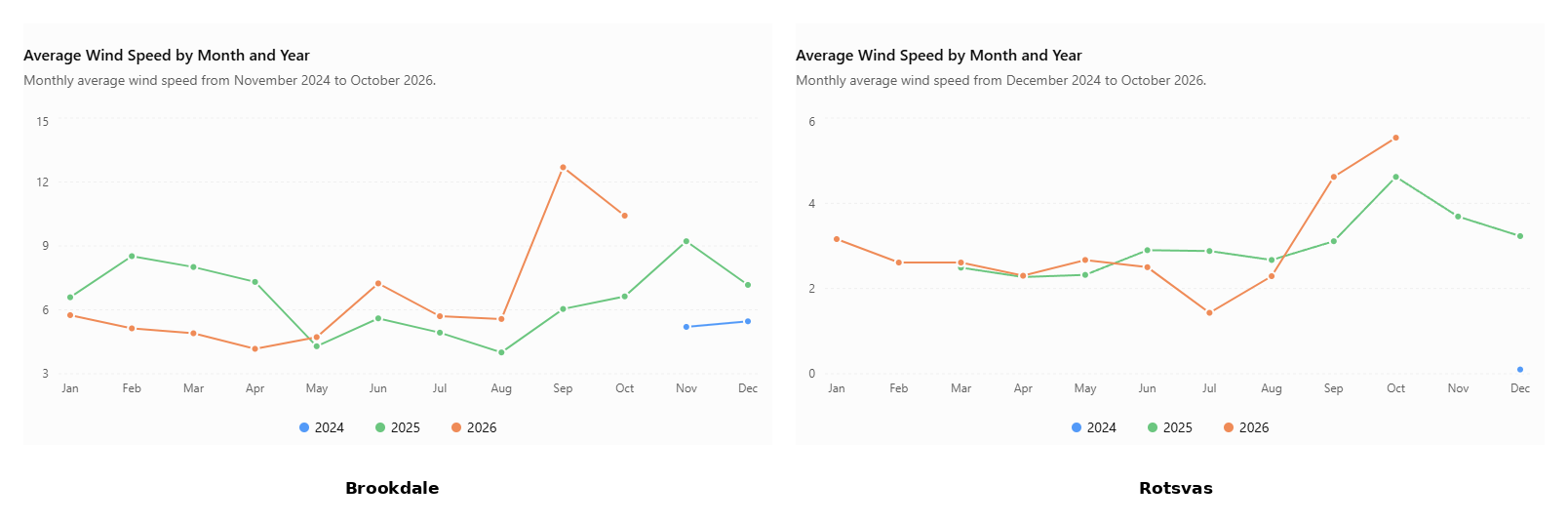
With a warm and dry winter behind us we did get some rain in September. But our surface evaporation has been extremely high due to the insane South Easter winds we have had this year.
Now, don’t get me wrong — we are used to the South Easter during the growing season. But not this early, and certainly not this hectic.
Yet again I will let the graphs do the talking.
So with all this data, what can we expect from the season?
I don’t have a crystal ball, so I can only read what I see in the vineyards.
At the moment the vines are growing at a blinding pace. It is going to be an expensive season with more sprays, insane amounts of suckering work and, after these rains, plenty of weeding. In many cases this will have to be done manually, especially in the bushvine and organic vineyards.
We have very high disease pressure and with most varieties in full flower or just starting to flower, this is a crucial time in the vineyards.
Open canopies early in the season will help the vines dry off quicker, allow better crop protection penetration and allow the vines to make use of the winds we have to cool things down, dry out and, hopefully, stay healthier.
Insect pressure has also started earlier this year, and we will soon start releasing predatory insects to help control grapevine mealybug.
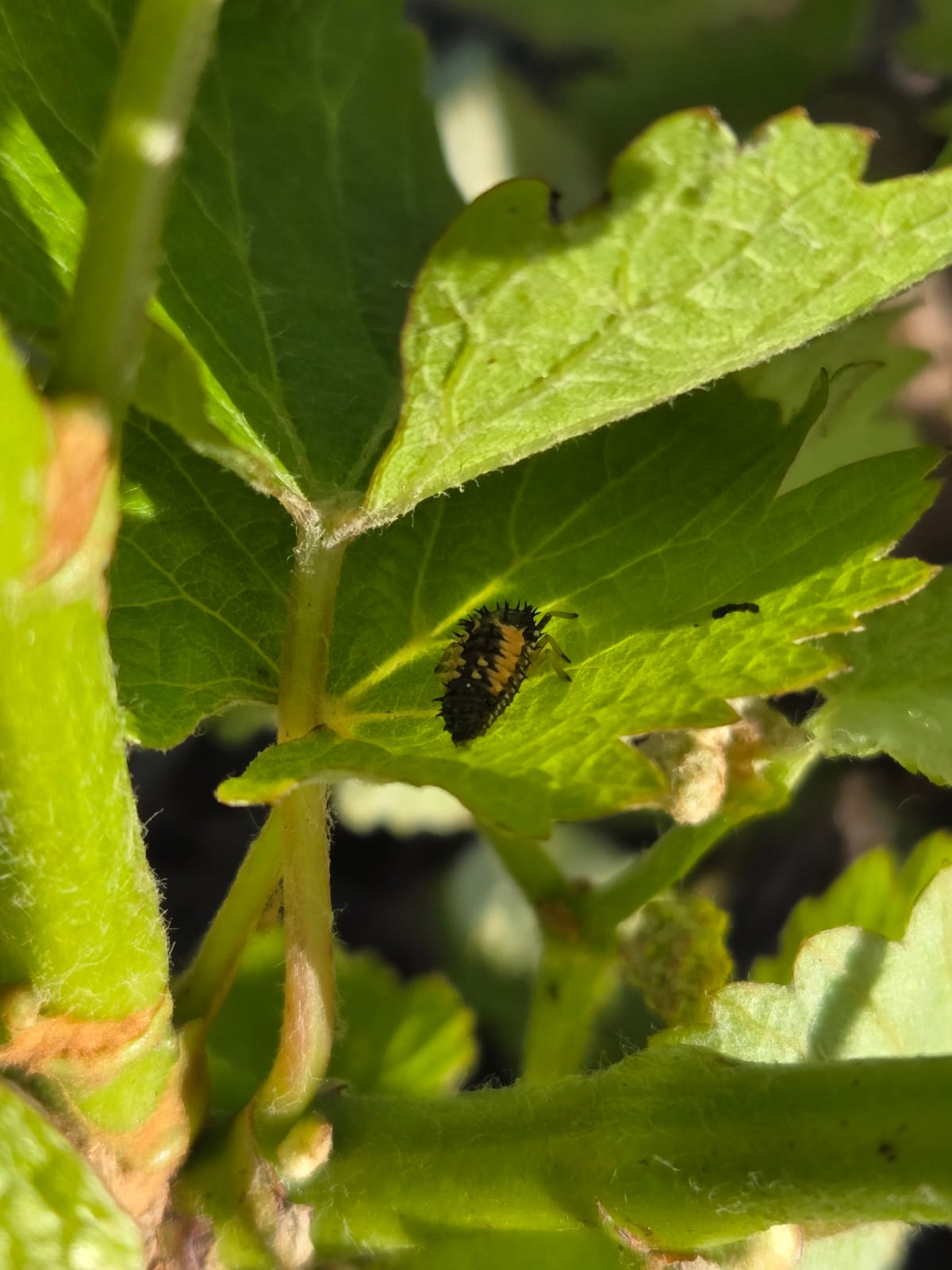
Ladybird larvae
Luckily, we have also seen an early explosion of ladybirds and ladybird larvae. Hopefully the mealybug doesn’t do the same!
We will continue to work hard in the vineyards and we appreciate all the hands that work tirelessly doing this difficult and often very hard work.
For now we watch the weather, watch the vines and keep grafting!