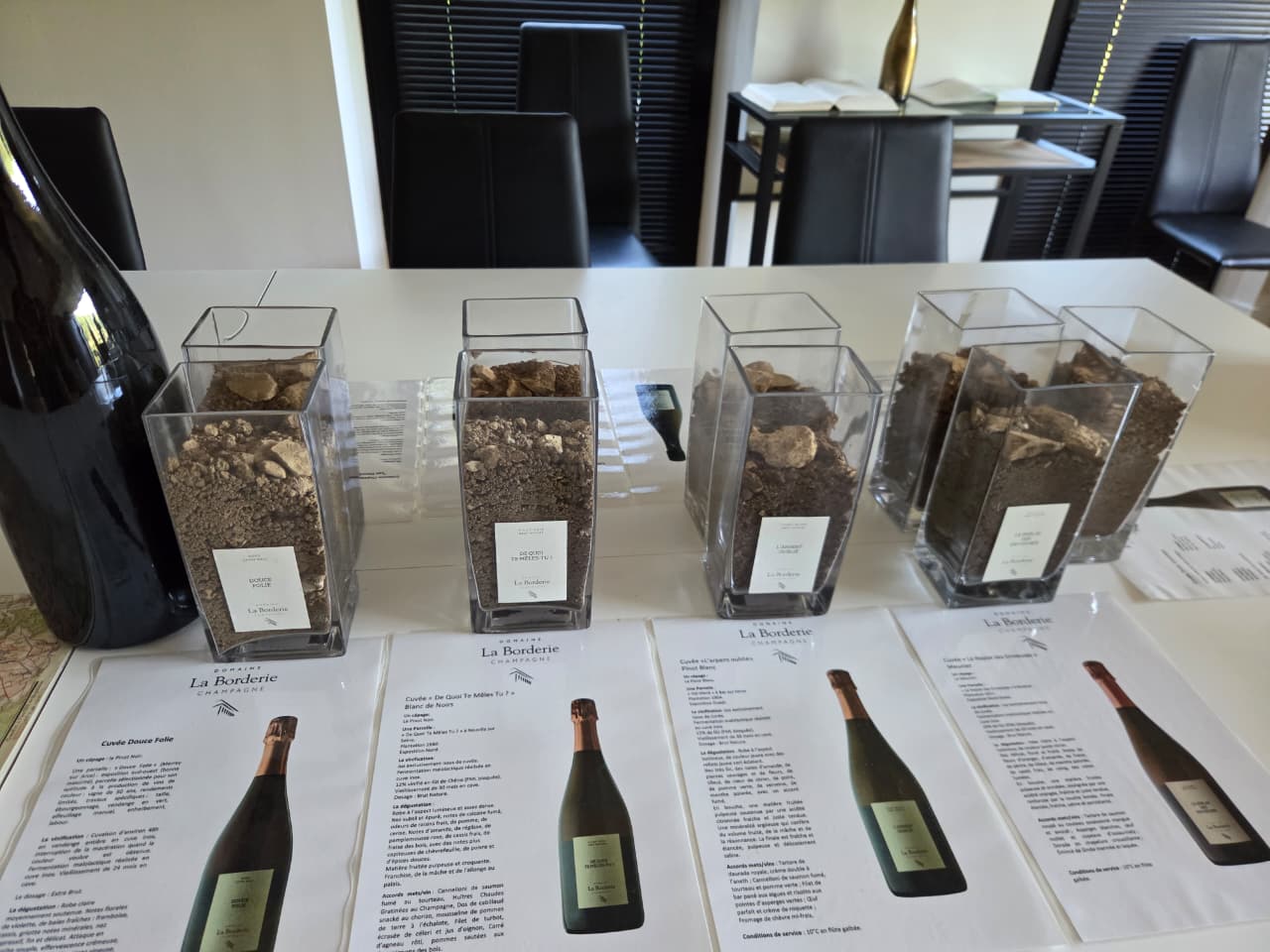
The next morning we headed into the Côte des Bar for our first visit in Champagne, Domaine La Borderie.
We were welcomed by Simon, who now runs the domaine alongside his sister. From the moment we arrived he made us feel incredibly welcome, taking the time to explain the history of the estate, their vineyards and their approach to making Champagne.
This was our first proper Champagne tasting of the trip, and it certainly didn’t disappoint. The wines were excellent and it was a great introduction to the region. Simon was a fantastic host—easy-going, passionate and more than happy to answer every question we threw at him. A big thank you to Simon for making our first stop in Champagne such an enjoyable one.
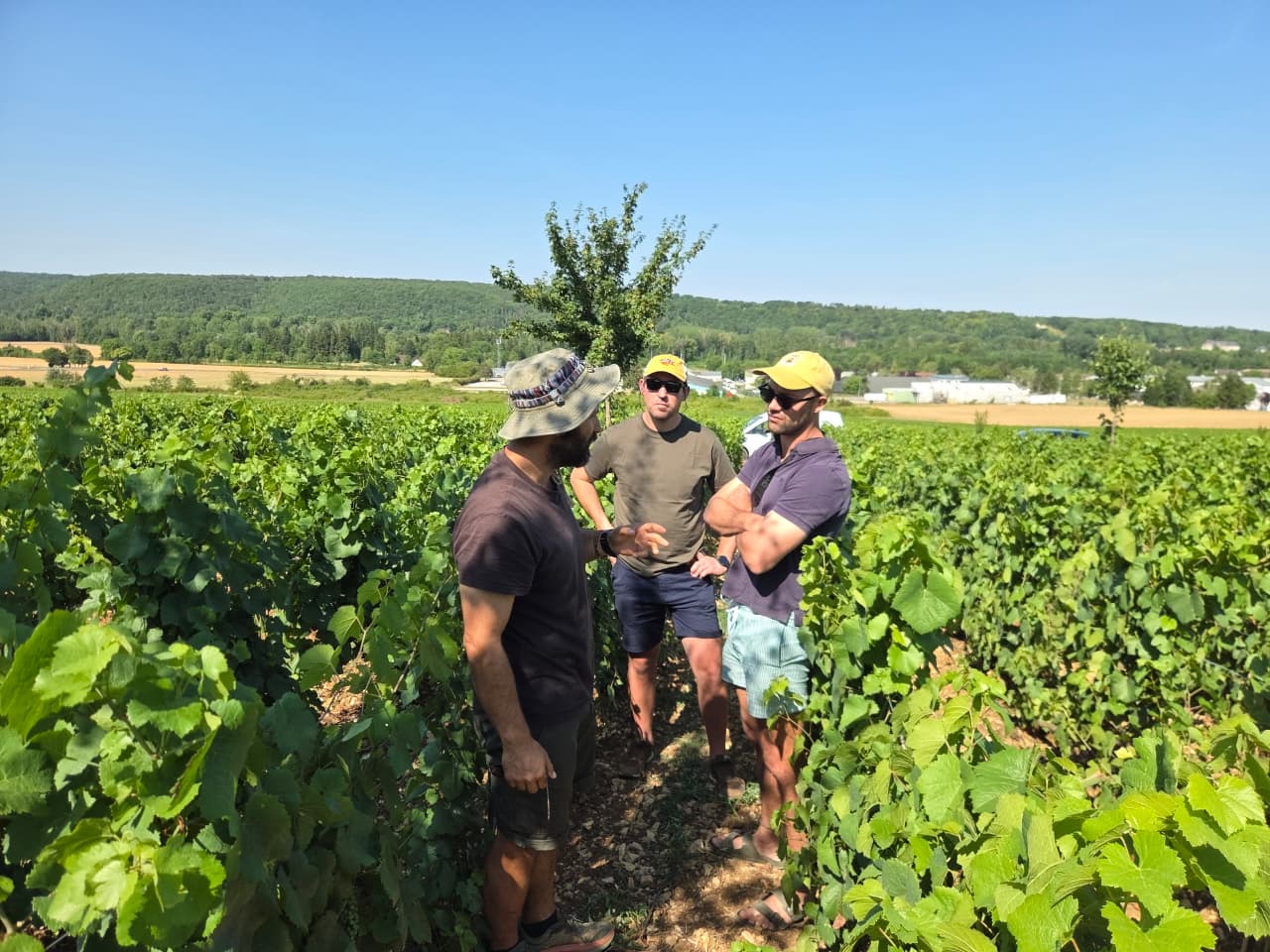
After La Borderie, Dimitri took us to look at several vineyard trials in the Côte des Bar. We saw individual trees planted amongst the vines, experiments with different planting densities and vineyards with varying cordon heights and wider rows. It was great to see growers testing different approaches and asking questions about what Champagne vineyards might need to look like in the future.
Looking back on our time in Champagne, this was the moment where a common theme first began to emerge. Although this was only our first day in the region, writing this a few weeks later I realise many of the conversations we had over the following days pointed in the same direction.
Climate change wasn’t just a topic of conversation; it was influencing decisions in the vineyard. Producers were openly discussing new ideas and evaluating different ways of farming to help them cope with warmer growing seasons.
What also became apparent was the tension between innovation and regulation. Champagne has some of the strictest production rules in the world, and many vineyard practices are governed by legislation. Several of the people we met spoke about how these regulations can slow the adoption of new practices, even when there is broad agreement that change is needed.
At the same time, there appeared to be genuine momentum within the region. We repeatedly heard about serious discussions around adapting some of the legislation to allow growers to respond more quickly to the realities of climate change. The challenge, of course, is finding the balance between protecting the identity of Champagne while giving producers the flexibility they need to adapt.
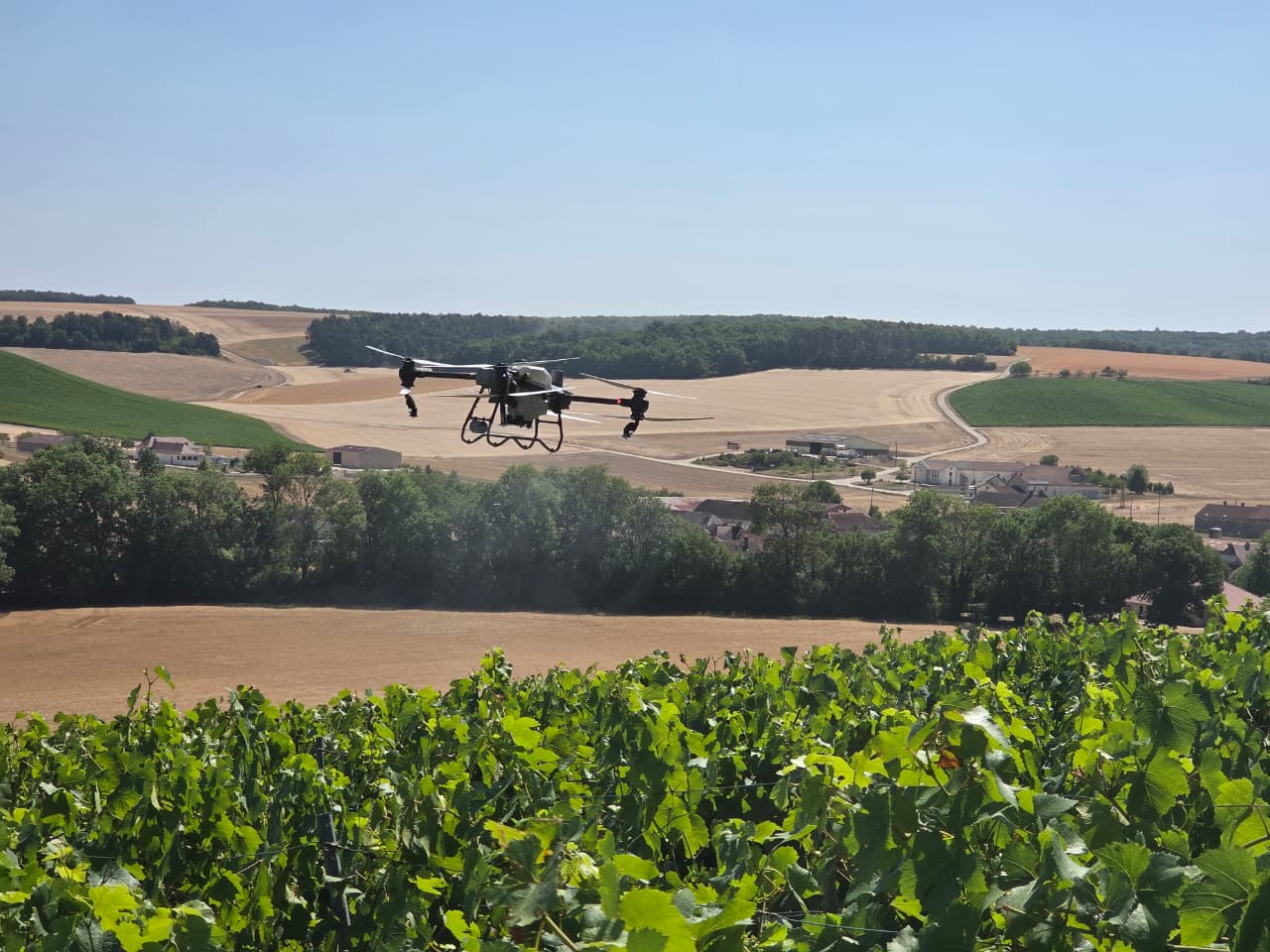
Our next stop was Champagne Serge Mathieu. We watched a quick drone demonstration in the vineyard before heading back to the cellar, where Michel Mathieu poured us a glass of Champagne and we spent a few minutes discussing some of the challenges facing the region and how producers are adapting to a changing climate.
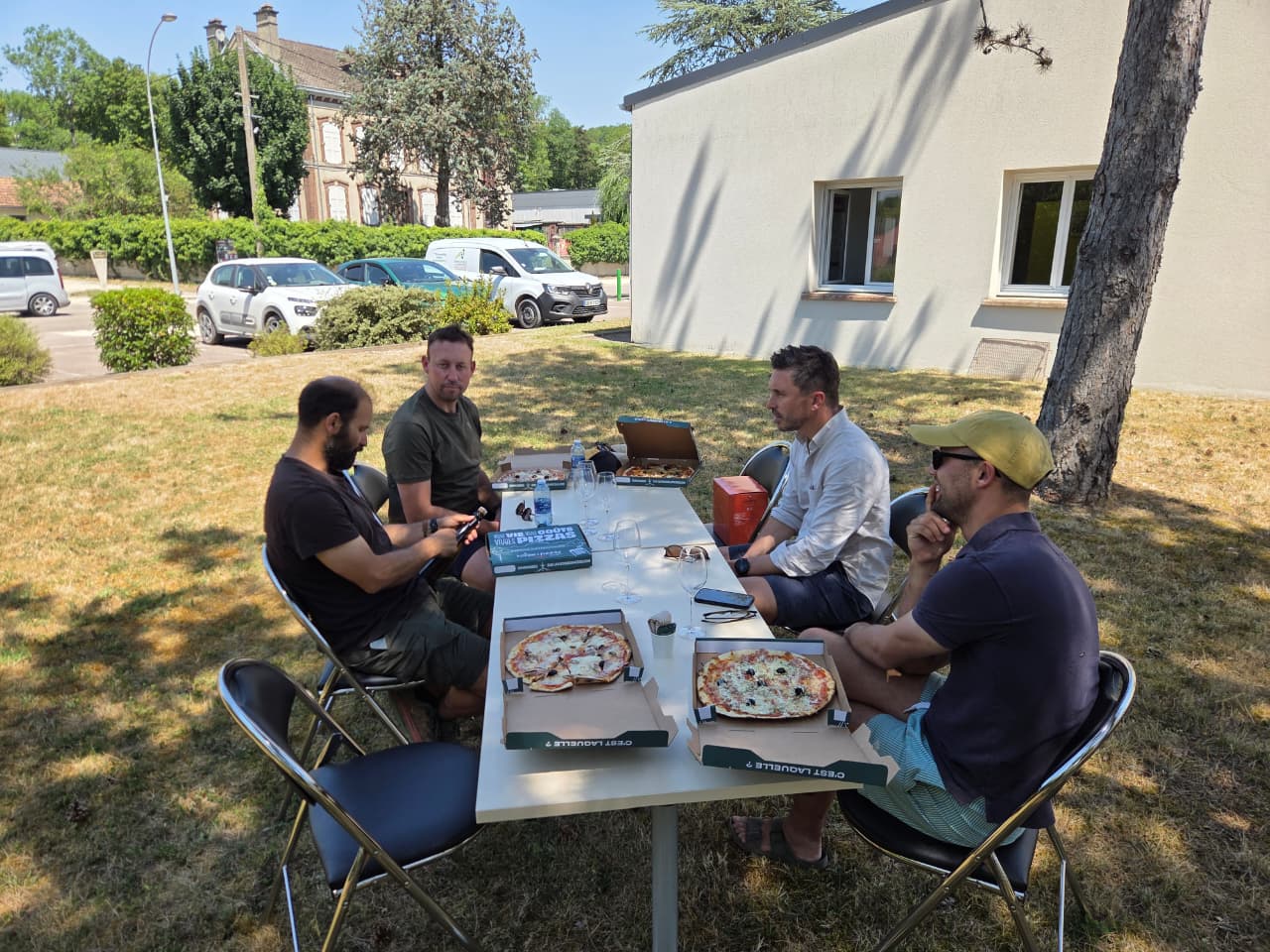
From there we stopped at a little roadside pizza stall, just a hundred metres from Dimitri’s workplace, grabbed a few pizzas and headed back to enjoy lunch under the shade of a tree. Naturally, the pizzas were accompanied by a glass of Champagne.
After lunch we climbed back into the cars and made our way to Domaine de Mondeville.
Our final visit for the day was Domaine de Mondeville, where we were welcomed by Bernard. He showed us around the cellar and one section in particular stood out, where the bedrock had been left exposed as one of the cellar walls. It was a simple but striking reminder of the geology that underpins the wines of the region.
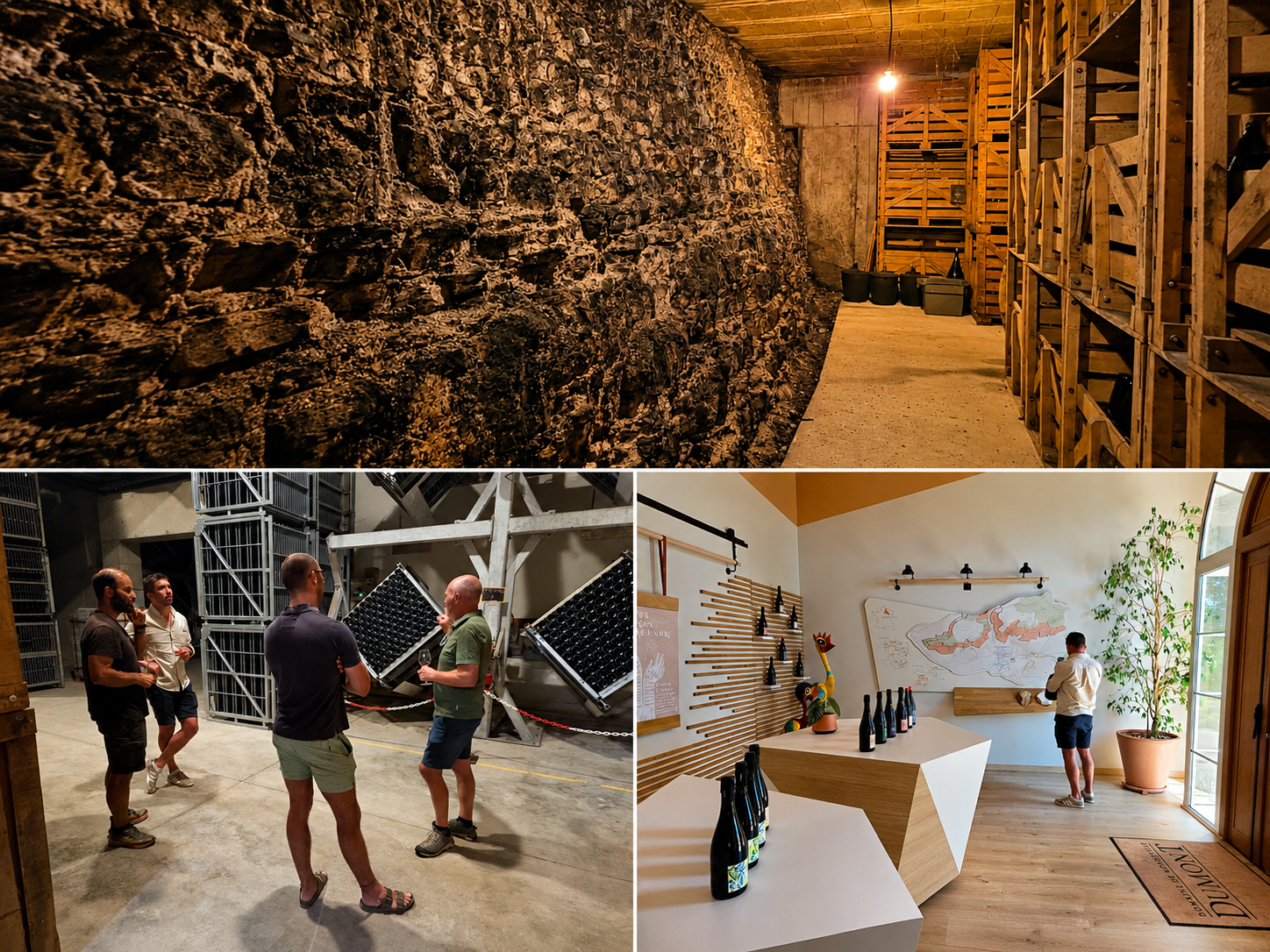
We finished the visit by tasting a selection of their Champagnes, a fitting way to end our first full day in the Côte des Bar.
After our visit to Domaine de Mondeville, we headed back to Troyes for a quick shower before meeting up with Dimitri for dinner.
It had been a fascinating first day in Champagne. We had tasted some outstanding wines, visited several innovative vineyard trials and had great discussions about the challenges the region is facing. A huge thank you to Dimitri for putting together such a fantastic programme in the Côte des Bar and for sharing his knowledge of the region with us.
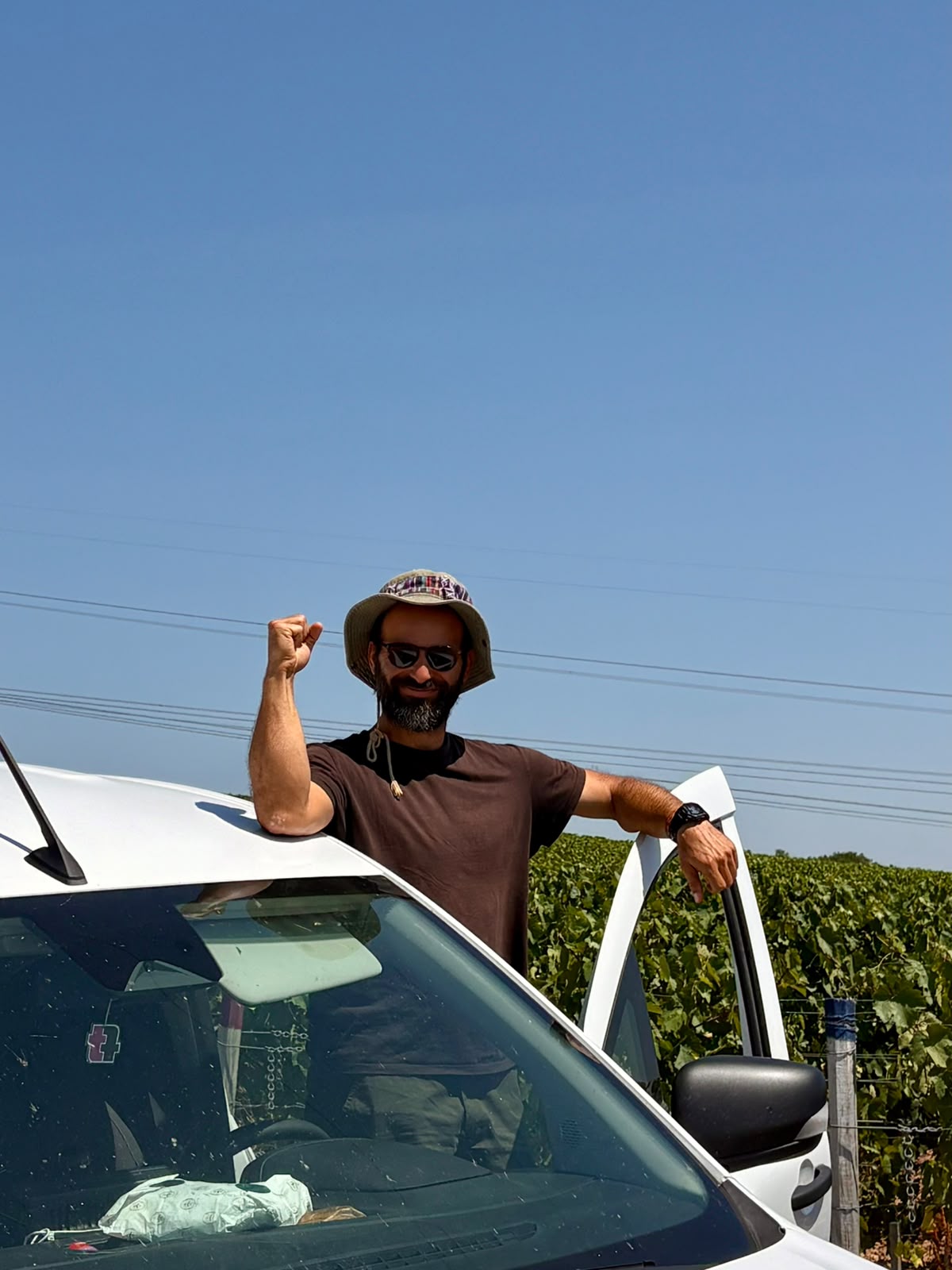
Dimitri – The mayor of Côte des Bar! – Thanks either Marko or Etienne for the photo
The following morning we packed the cars and headed north for the final leg of our Champagne journey. Our base for the next few days would be Reims, from where we would explore some of the region’s most famous villages and producers.